Work with product managers as partners, join discovery to shape feasible options, turn product goals into quality-attribute requirements, negotiate capacity for enablers and debt, prioritise using value and architectural significance, make technical work visible in business terms, and define minimum viable architecture for MVPs
Architecture and product management share one goal — delivering valuable outcomes sustainably — from different angles: product management decides what problems to solve and in what order; architecture ensures the solution can be built, evolved and run at acceptable cost and risk. In practice the relationship is expressed through discovery collaboration, backlog composition, capacity agreements, joint prioritisation and roadmaps that include architectural enablers.
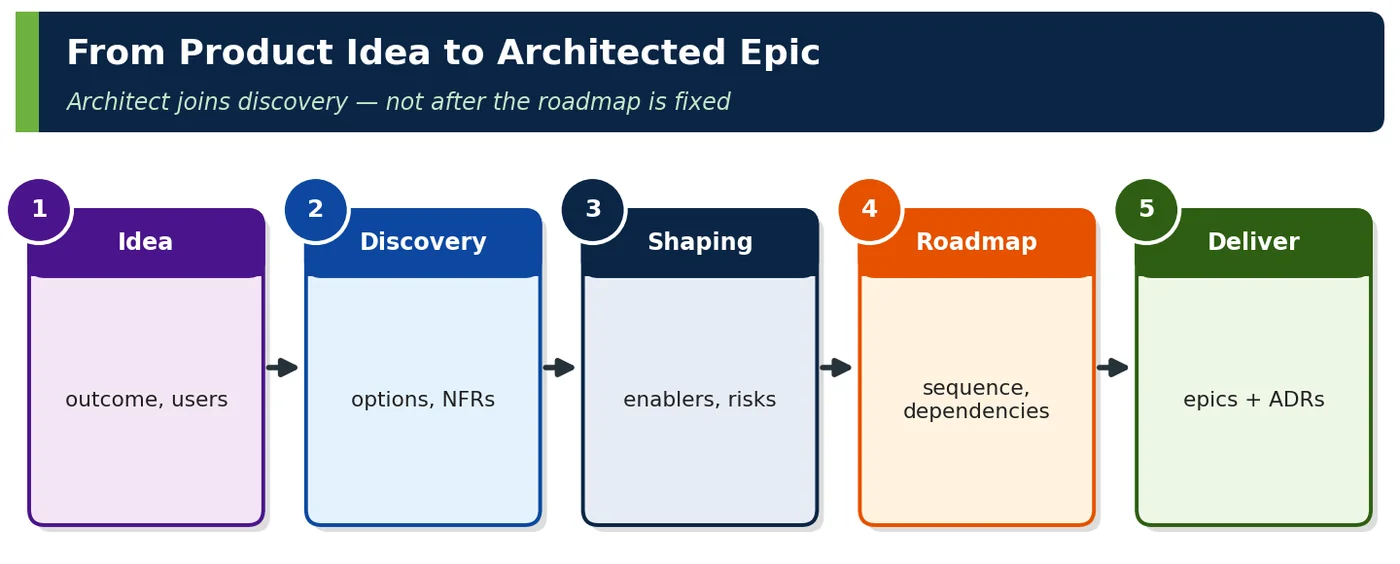
Figure 1 — From product idea to architected epic
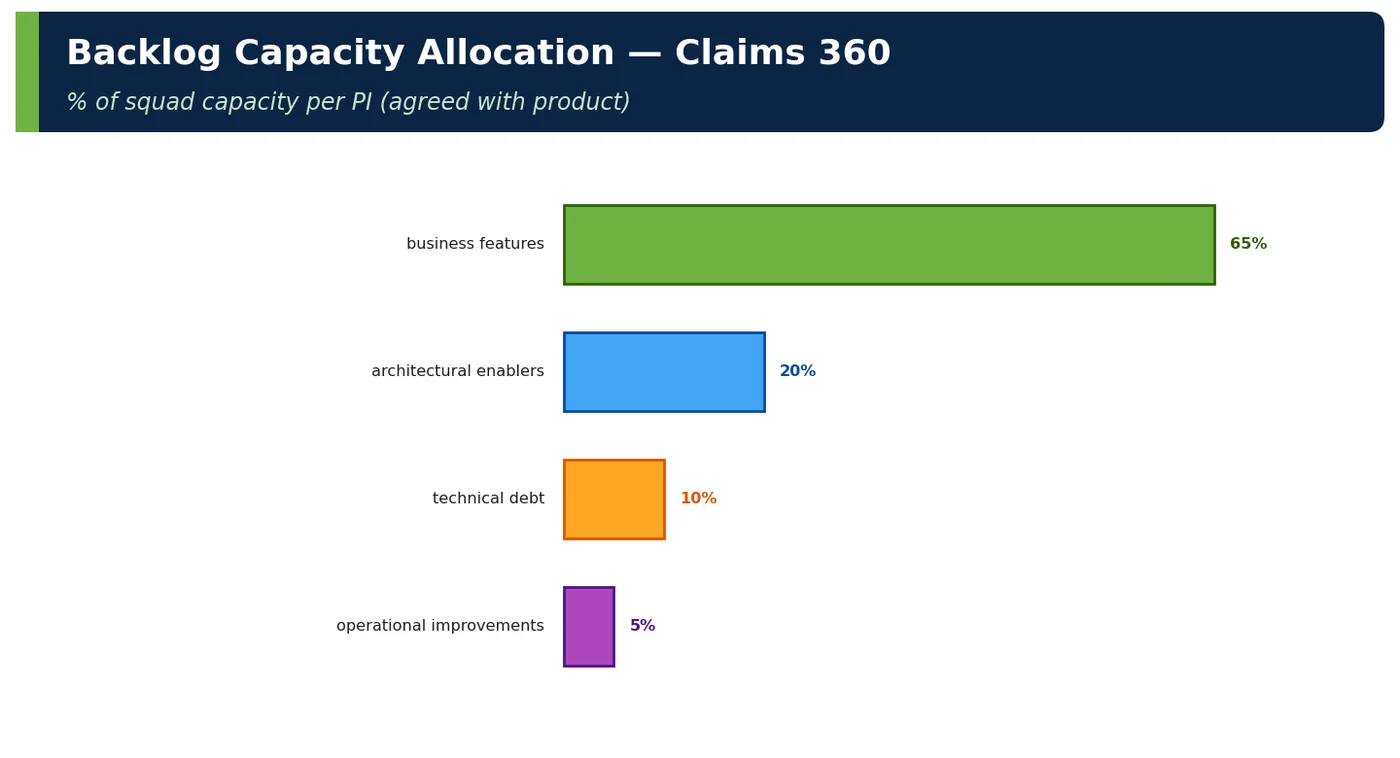
Figure 2 — Backlog capacity allocation
Vocabulary
Meaning
Enabler
Backlog item creating technical foundations
Capacity allocation
Agreed share of team capacity per work type
Cost of delay
Value lost per unit time by not delivering
Minimum viable architecture
Least architecture that safely supports an MVP and its next steps
Table 1 — Terms
2Why It Exists
Poor partnership
Consequence
Architect joins after roadmap fixed
Infeasible dates, rework
NFRs absent from backlog
Late performance and security surprises
Debt invisible
Velocity erodes, nobody knows why
Architect vetoes
Product routes around architecture
Table 2 — Why partnership
3Core Concepts — Backlog Composition
Work type
Owner of priority
Claims 360 share
Business features
Product
65%
Architectural enablers
Joint (architect proposes)
20%
Technical debt
Joint (team proposes)
10%
Operational improvements
Joint (SRE proposes)
5%
Table 3 — Capacity agreement reviewed each PI
4How It Works Internally — Architecture in Discovery
Discovery question
Architect's contribution
Is it feasible?
Options sketch, dependencies, spikes
What quality does it need?
Latency, availability, scale, security as scenarios
What does it cost to build and run?
T-shirt effort; run-cost estimate
What does it enable next?
Reuse, runway, platform leverage
What could go wrong?
Top risks
Table 4 — Architect in the discovery trio
4ADeep Dive — Prioritising With Architectural Significance
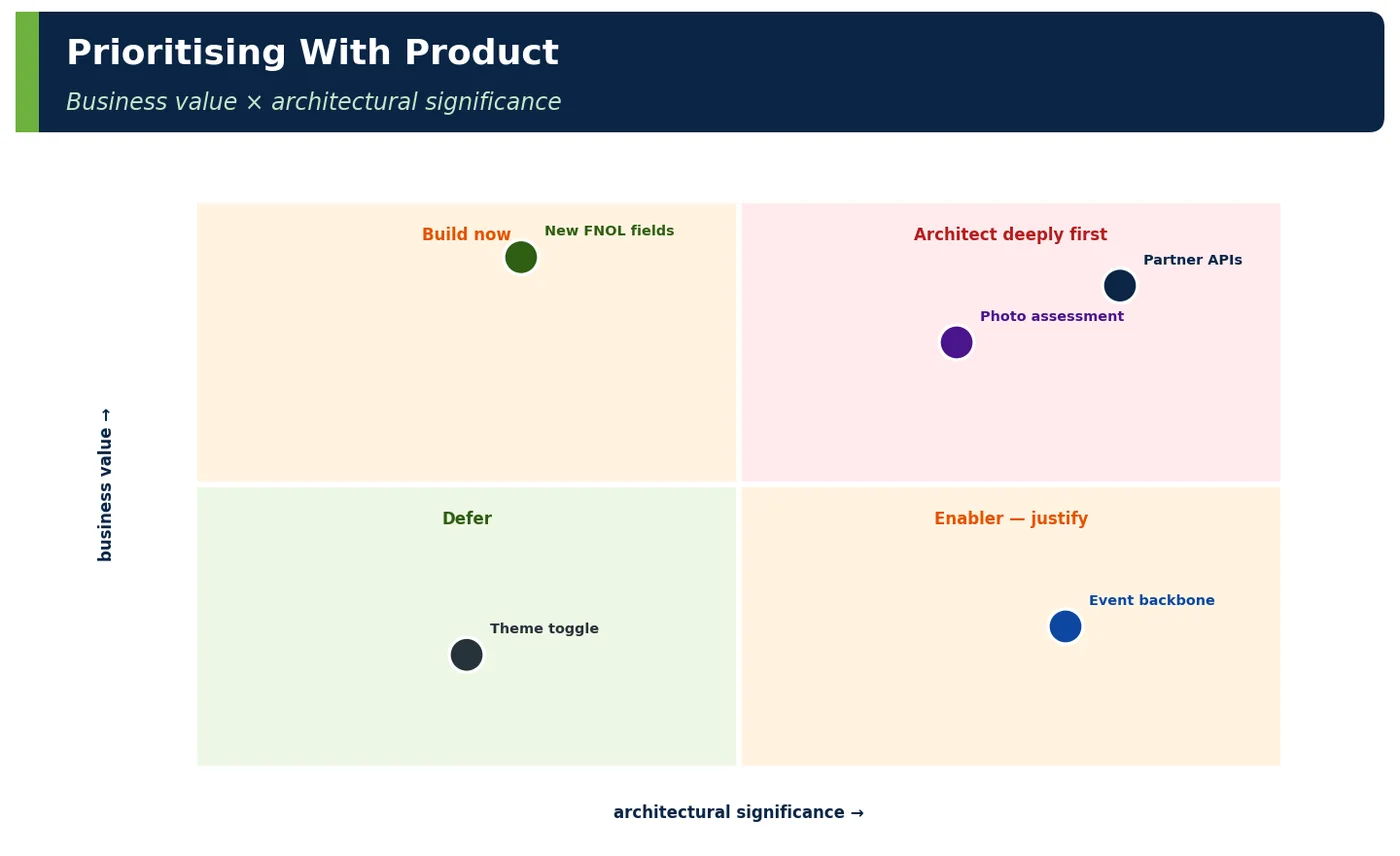
Figure 3 — Prioritising with product
Quadrant
Treatment
High value, high significance
Architect deeply before committing dates
High value, low significance
Build now
Low value, high significance (enablers)
Justify via the features they unlock
Low value, low significance
Defer
Table 5 — Joint prioritisation
4BDeep Dive — Making Technical Work Visible
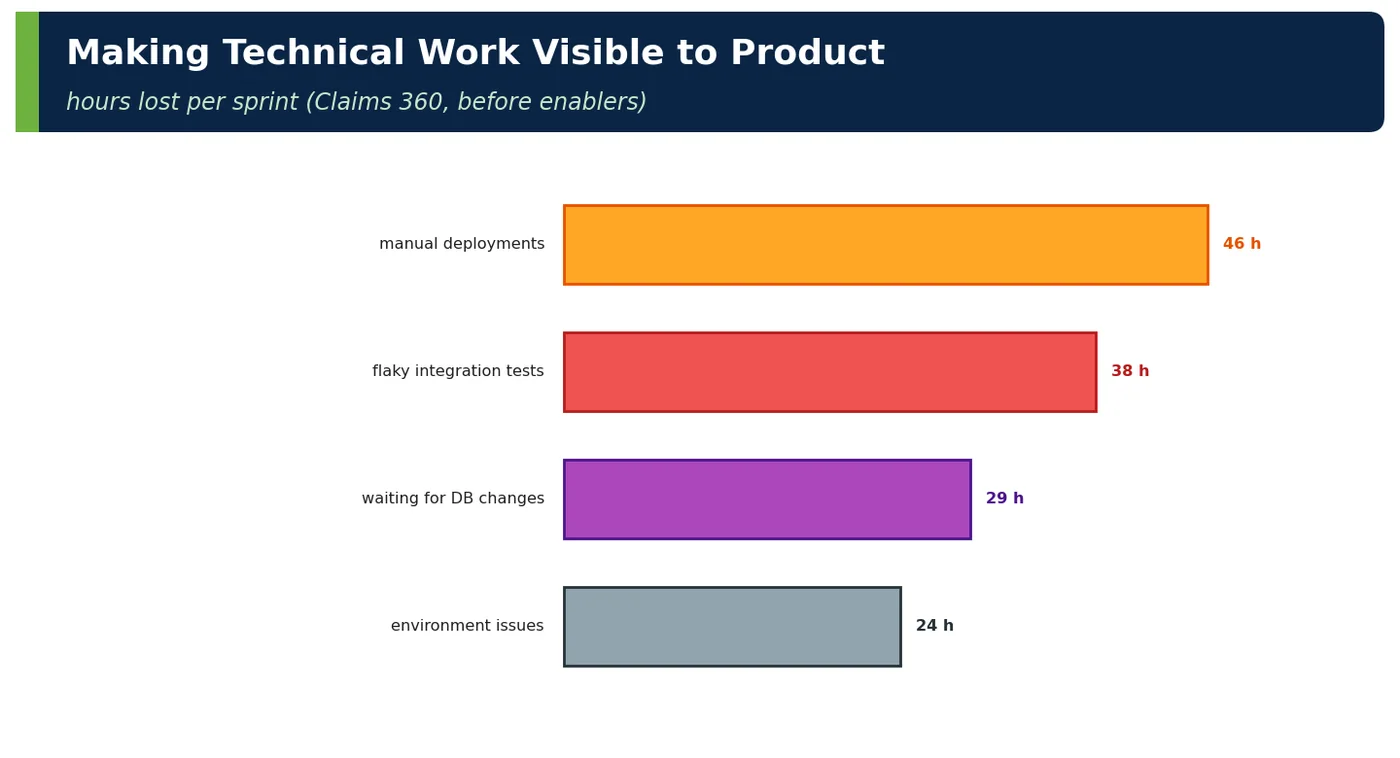
Figure 4 — Making technical work visible to product
Technique
Example
Hours lost per sprint
137 h/sprint lost to manual deploys, flaky tests, DB waits
Cost of delay for enablers
Partner APIs blocked 6 weeks without gateway
Risk exposure
Unpatched runtime = audit finding
Incident cost
₹ per hour of FNOL downtime
Table 6 — Speak in product's currency
4CDeep Dive — Quality Attributes From Product Goals
Product goal
Quality attribute scenario
"FNOL in under 3 minutes"
FNOL submit p95 ≤ 400 ms under 5× normal load
"Cyclone-ready"
Document uploads survive 20× surge with ≤ 5 min processing
"Partners self-serve"
Partner API availability 99.9%, onboarding < 1 day
"Trust"
No PII in logs; audit trail for every decision
Table 7 — Turning ambitions into testable requirements
4DDeep Dive — Minimum Viable Architecture
For an MVP
Decide now
Defer
Partner FNOL pilot
Auth model, API contract, data ownership
Multi-region, caching, rate tiers
Photo assessment beta
Model hosting boundary, human review path
Autoscaling tuning, cost optimisation
Rule
Enough to avoid one-way-door mistakes
Everything reversible
Table 8 — Architecture for learning fast
4EDeep Dive — Roadmaps With Enablers
Roadmap practice
Detail
Enablers shown on roadmap
Visible dependencies
Dependency arrows to features
Why they matter
Confidence levels
Now/next/later rather than dates far out
Joint review each PI
Adjust capacity split
Table 9 — One roadmap, not two
4FDeep Dive — Trade-off Conversations With Product
Lever
What changes
Example
Scope
Fewer capabilities in this release
Partner API read-only first
Time
Later date for full quality
Photo assessment beta, GA next PI
Quality attributes
Temporarily lower targets, explicitly
99.5% for beta instead of 99.9%
Cost
More spend to keep scope and date
Managed service instead of building
Risk
Accept a known risk with owner and expiry
Manual fallback for 1 quarter
Table 10 — Five levers — never silently drop quality
# Capacity allocation agreement (reviewed each PI with product leadership)pi: 2026-PI3allocation: features: 65 enablers: 20 tech_debt: 10 operations: 5exceptions: - "Cyclone season prep (Sept): operations 10%, features 60%"review_triggers: [blocked features > 3, incidents P1 > 2 in PI]signed: [head-of-product-claims, solution-architect, engineering-manager]
MARKDOWN
## Option paper: Partner FNOL API (for product decision)| Option | Time | Run cost | Risk | Future cost ||---|---|---|---|---|| A Expose internal API | 2 wks | low | high (coupling, security) | high || B Partner facade + OAuth2 | 6 wks | medium | low | low || C Facade, read-only phase 1 | 3 wks | low | low | low |Recommendation: C now, B complete in PI4. Decision owner: Head of Product.
YAML
# Quality attribute scenario attached to a product epicepic: FE-118 partner FNOLscenario: source: partner system stimulus: 50 FNOL submissions/s (cyclone surge) environment: normal operation, one AZ degraded response: accepted and acknowledged measure: p95 ≤ 600 ms, zero loss, 99.9% monthly availability
6Practical Examples
6.1 Claims 360 capacity agreement
Product and architecture agreed 65/20/10/5 capacity per PI; a visible "hours lost" chart (137 h/sprint) won the first enabler budget — deployment automation paid back in two sprints.
6.2 Partner APIs
Instead of vetoing "expose the internal API", the architect offered three options; product chose a read-only facade in three weeks and the full facade a PI later.
6.3 NovaBank NFR surprise
Product had committed a date for instant payments without latency requirements; a late load test failed. Afterwards, quality scenarios were attached to every epic in discovery.
6.4 Worked example — capacity split
65/20/10/5
Agreed
Table 12 — Partnership
6.5 Worked example — options not veto
3 options
Product chose C
Table 13 — Behaviour
6.6 Worked example — hours lost
137 h/sprint
Funded enablers
Table 14 — Visibility
6.7 Worked example — interview whiteboard
Prompt
Answer outline
"How do you work with product managers?"
"Partners on outcomes: architect in discovery (feasibility, options, quality scenarios, cost, risks). Backlog includes enablers, debt and ops work with an agreed capacity split reviewed each PI. Prioritise by value × architectural significance; justify enablers by the features they unlock and cost of delay. Make technical work visible in product currency (hours, delay, risk, incident cost). Offer options with costs, never vetoes. Minimum viable architecture for MVPs — decide one-way doors only. One roadmap with enablers and dependencies."
The architect as gatekeeper is the most common failure: vetoes and late design reviews teach product to route around architecture, so decisions get made without it. Late involvement is the second; when the architect first sees an initiative after dates are committed, feasibility problems become schedule crises. Technical work also stays invisible when it is described only in engineering terms, so debt and enablers lose every prioritisation discussion. Finally, separate business and technical roadmaps hide dependencies, which is how a feature gets scheduled before the platform it needs. The fixes are options instead of vetoes, the discovery trio, quantifying work in hours, money and delay, and one shared roadmap.
8Performance & Production Considerations
Consideration
Practice
Quality scenarios tested
In pipeline
Run-cost visibility
Per feature
Incident cost
Reported to product
Table 36 — In operation
The partnership has to show up in production data, not just in planning rituals. Quality attribute scenarios attached to epics become automated performance and resilience tests in the pipeline, so a feature cannot ship while violating its agreed latency target, which is how NovaBank was caught out with instant payments. Run cost is tracked per feature, for example GPU spend for photo assessment, so product sees the economics of its choices. Incident cost and SLO breaches are reported to product in rupees and customer impact, which keeps reliability work on the backlog. Feature toggles decouple release from deployment, giving product control of timing while engineering deploys continuously and safely.
9Architecture & Design Considerations
Guideline
Detail
Partner, don't police
Trust
Quantify
Decisions
Enablers visible
Flow
Table 37 — Design guidance
10Interview Questions & Answers
Q1BasicConcept
How do product and architecture differ?
Product management decides which problems to solve, for whom and in what order, based on customer and business value; architecture ensures the chosen solutions can be built, evolved and operated at acceptable cost and risk. They share one goal, delivering valuable outcomes sustainably, from different angles. Product owns the why and the what; architecture shapes the how and the how well, including quality attributes, technical foundations and the long-term consequences of short-term choices. The relationship fails when either side works alone: product commits dates the system cannot meet, or architecture builds foundations nobody needs. In Claims 360 the two work as partners through joint discovery, a shared backlog and one roadmap.
Q2BasicConcept
What is an enabler?
An enabler is a backlog item that creates technical foundations so future features can be delivered faster, more safely or at all, without delivering user-visible functionality itself. Examples are an API gateway that partner FNOL integration depends on, deployment automation, a performance-test harness, observability or a new data platform. In SAFe and similar frameworks enablers are an explicit work type alongside features, technical debt and operational work. The important property is that each enabler is justified by what it unlocks: the gateway was valued by the six weeks partner APIs would otherwise be blocked. Enablers that cannot be linked to future features or reduced risk are usually gold-plating and deserve challenge.
Q3IntermediateTrade-off
Why agree capacity allocation?
Because without it, every enabler, debt item and operational fix must win a fresh argument against a visible customer feature, and it usually loses until something breaks. A capacity allocation agrees in advance what share of team capacity each work type receives. On Claims 360, product and architecture signed 65 percent features, 20 percent enablers, 10 percent technical debt and 5 percent operations, reviewed every PI. Product still prioritises within the feature share, and items in the other shares are prioritised jointly. Exceptions are planned, such as raising operations to 10 percent before cyclone season, and review triggers, such as more than three blocked features, prompt renegotiation based on evidence.
Q4IntermediateBehavioural
How do you join discovery?
By joining the discovery trio with the product manager and designer from the start, not after the roadmap is fixed. My contribution is to answer five questions quickly. Is it feasible, with a sketch of options, dependencies and any spikes needed? What quality does it need, written as quality attribute scenarios for latency, availability, scale and security? What will it cost to build and run, as t-shirt effort and a run-cost estimate, such as GPU cost for photo assessment? What does it enable next? And what could go wrong, as the top risks? Answering these lets roadmap dates rest on reality and surfaces one-way-door decisions before commitments are made.
Q5Senior EngineerEstimation
How make debt visible?
Translate it into product currency, meaning time, money, delay and risk, rather than code-quality metrics. On Claims 360 the team measured hours lost per sprint to manual deploys, flaky tests and database waits, 137 hours, and showed the chart to product leadership every PI; deployment automation was funded and paid back within two sprints. Other measures are cost of delay, such as partner APIs blocked for six weeks without the gateway; incident cost, such as rupees per hour of FNOL downtime; the interest on a hotspot, such as 32 lakh rupees a year; and risk exposure, such as an unpatched runtime that will become an audit finding. Rough numbers with stated assumptions suffice.
Q6Senior EngineerConcept
What is minimum viable architecture?
Minimum viable architecture is the least architecture that safely supports an MVP and its likely next steps. The rule is to decide now only the one-way doors, the choices that are expensive to reverse, and defer everything reversible until evidence arrives. For Claims 360's partner FNOL pilot, the authentication model, API contract and data ownership were decided upfront because changing them later would break partners, while multi-region deployment, caching and rate tiers were deferred. For the photo assessment beta, the model-hosting boundary and human review path were fixed, while autoscaling tuning and cost optimisation waited. It avoids both extremes: over-engineering a product that may pivot, and an MVP that must be rewritten.
Q7Technical ArchitectTrade-off
How prioritise with architectural significance?
Place items on two axes, business value and architectural significance, and treat each quadrant differently. High value, high significance work, such as a new claims workflow, gets serious architecture effort before any dates are committed. High value, low significance work is simply built now. Low value but high significance items are typically enablers; they are justified by the features they unlock and by their cost of delay, not on their own merit. Low value, low significance work is deferred. This prevents two opposite failures: significant decisions being rushed because a feature was urgent, and enablers being postponed forever because, viewed on their own, they appear to deliver nothing.
Q8Technical ArchitectDesign
How turn product goals into requirements?
By writing each product goal as a quality attribute scenario with a measurable response, attached to the epic during discovery. FNOL in under three minutes becomes FNOL submission at p95 of 400 ms or better under five times normal load. Cyclone-ready becomes document uploads surviving a twentyfold surge with processing within five minutes. Partners self-serve becomes 99.9 percent partner API availability and onboarding in under a day. Trust becomes no PII in logs and an audit trail for every decision. Each scenario names source, stimulus, environment, response and measure, so it can be designed against, tested automatically in the pipeline and monitored in production.
Q9Solution ArchitectBehavioural
What do you offer instead of saying no?
Options with their consequences, so that product can make an informed choice. A veto invites a workaround; options invite a decision. For partner FNOL, instead of refusing to expose the internal API, the architect offered three: expose it directly in two weeks, with high coupling and security risk; build a partner facade with OAuth2 in six weeks, with low risk; or ship a read-only facade in three weeks and the full facade next PI. Each showed time, run cost, risk and future cost, and product chose the third. The levers are scope, time, quality targets, cost and accepted risk, and any debt created is recorded with an owner.
Q10Solution ArchitectDesign
How keep one roadmap?
Put enablers, technical debt and platform work on the same roadmap as features, with dependency arrows showing which features they unlock, instead of maintaining a separate technical roadmap that product never reads. The gateway enabler sits directly before the partner FNOL feature it supports, so delaying one visibly delays the other. Use confidence levels, such as now, next and later, rather than precise dates far into the future. Review the roadmap jointly every PI and adjust the capacity split when the evidence demands it. A shared dashboard combining product metrics with DORA metrics reinforces that delivery speed and system health are one conversation, owned together by product and architecture.
Newsletter
Get new tutorials every week
New ArchitectMind tutorials and interview questions, once a week. No spam, unsubscribe anytime.
Your subscription could not be saved. Please try again.
Almost done! Check your inbox and click the confirmation link to complete your subscription.
 Architect